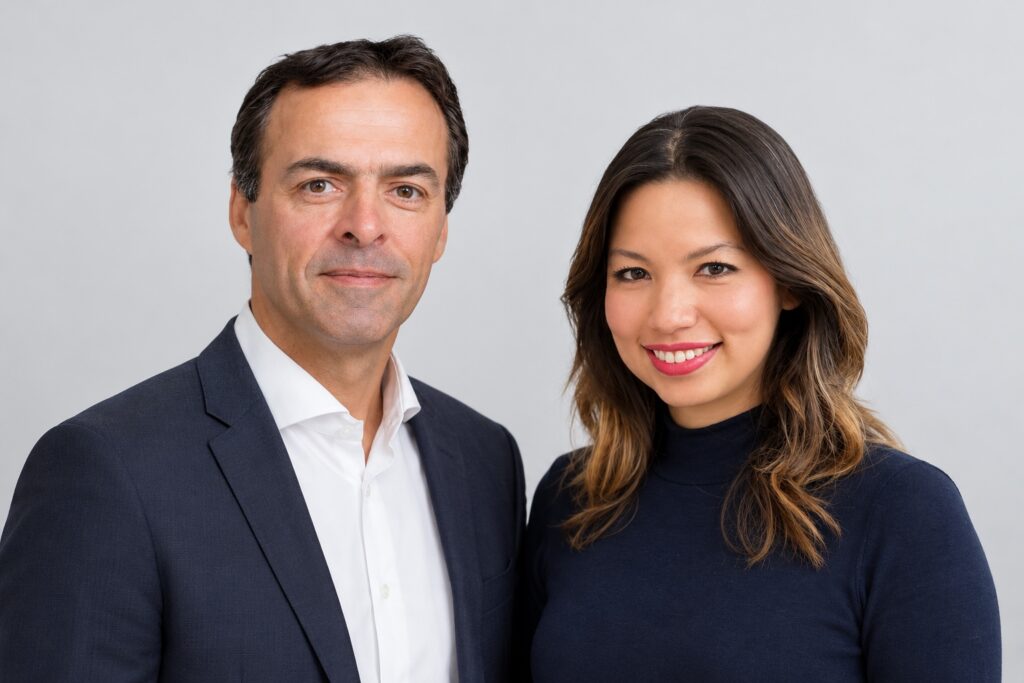
A conversation with Grégory Renand, Head of the Z Zurich Foundation, and Suzannah Richard, Communications Manager, on the changing role of philanthropy and why communication can be a strategic enabler of impact.
As part of our .foundations research, we are speaking with foundations that are rethinking traditional models of philanthropy and exploring new ways to strengthen their role and impact in society.
Following our conversation with Cynthia Hansen of the Innovation Foundation, we spoke with Grégory Renand, Head of the Z Zurich Foundation and co-lead of the Corporate Foundations Working Group at SwissFoundations, and Suzannah Richard, Communications Manager. Grégory also co-leads the Corporate Foundations Working Group of SwissFoundations, a forum for corporate foundations for exchanging experience.
Our conversation explored how growing societal needs are changing the role of philanthropy, why collaboration is becoming increasingly important, and what the relationship with Zurich Insurance Group makes possible. It also highlighted a point that is central to our research: communication is not simply about reporting impact after the fact. It can help foundations make effective solutions visible, engage other funders and institutions, build partnerships and ultimately scale what works.
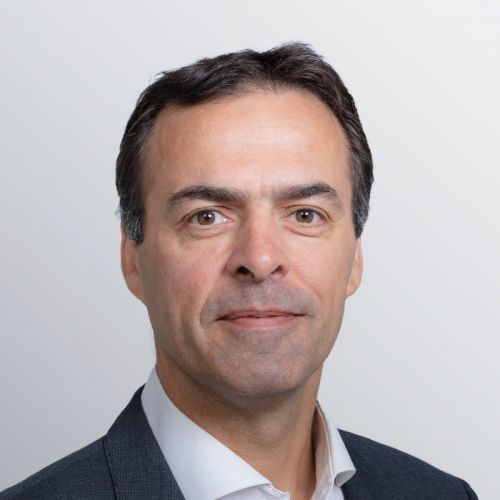
Head of the Z Zurich Foundation. Under his leadership, the Foundation has strengthened its focus on collaboration and scaling impact. He also co-leads the Corporate Foundations Working Group of SwissFoundations, a forum for corporate foundations to exchange experience.
L: In several recent articles, you have spoken about the need to redefine what a foundation can be. How do you see the role of philanthropy evolving?
GR: We are in a situation where vulnerability levels are already very high and continue to grow. We see it in climate risk exposure, mental health, access to education and opportunities, and in the increasing number of crises around the world.
At the same time, the ability of the traditional response system to address these needs has declined, including through reductions in government aid. This creates an imperative for the philanthropic sector to work differently.
For a long time, many organisations have worked in silos. Going forward, we need to work much more jointly. Before starting a new mental health programme in a country, for example, we should first understand whether there is already an effective programme or ecosystem that we can support and strengthen.
This applies not only to foundations, but also to governments, NGOs and the private sector. We all have different roles, but ultimately we are part of the same value chain for the people who need support.
Philanthropy can play an important role as a catalyst. But it should not create dependency. Our role can be to identify what works, help it grow and bring in other actors who can ultimately make that impact sustainable.
L: What does this more collaborative model look like in practice?
GR: There are different ways to approach collaboration. Sometimes it means joining an existing programme and bringing additional resources or expertise. In other cases, it means aligning with other funders from the beginning and co-creating something together.
One example is our global work with UNICEF on youth mental wellbeing. When we started working together five years ago, part of the agreement was to co-create a global coalition around youth mental wellbeing.
Today, that coalition brings together different companies and organisations to combine resources, expertise and reach. It also creates opportunities to work together on advocacy and communication. The point is that, by joining forces, we can support an issue at a scale that would be much more difficult for one organisation to achieve alone.
“Philanthropy can play an important role as a catalyst. But it should not create dependency. Our role can be to identify what works, help it grow and bring in other actors who can ultimately make that impact sustainable.”
Another example comes from our work with Junior Achievement Africa. We had been supporting a programme focused on entrepreneurship and employability for young people in Africa. When discussing its future, we started exchanging experiences with the Audemars Piguet Foundation, which was interested in similar issues.
We realised that instead of developing separate initiatives, we could join forces from the outset. We are now investing equally in a four-year programme across four African countries, working with two major NGO partners.
What is particularly valuable is that collaboration is not only about pooling funding. Each organisation brings different capabilities. One partner may have a particularly strong approach to impact, another to due diligence or programme design. Working on a concrete programme allows us to learn from each other and take those capabilities back into our own organisations.
That is where collaboration becomes mutually reinforcing: it improves the programme and the impact for people on the ground, but it also strengthens the organisations involved.
L: The Z Zurich Foundation works very closely with Zurich Insurance Group while remaining an independent foundation. What does that relationship make possible?
GR: We are legally independent, with separate governance, but we have intentionally chosen to work closely with Zurich because of the opportunities this creates for achieving social impact.
Beyond funding, we can draw on the time, skills, expertise and relationships of 60,000 Zurich employees around the world. This gives the Foundation access to resources and knowledge whose value can go far beyond the financial contribution alone.
Mental health is a good example. Through its life insurance business, Zurich has long understood the human, economic and societal costs of mental health issues. The Foundation was able to take that insight and ask a different question: how can we intervene earlier, before those issues become more serious? This is where our strong focus on prevention comes in.
The purposes of the two organisations remain distinct: “The company is legitimately focused on business KPIs, while the Foundation is focused on helping people in need.” But working together allows us to use the company’s knowledge and capabilities to create greater social impact.
“The value of our relationship with Zurich goes far beyond funding: it gives us access to 60,000 employees worldwide — their time, skills, expertise and relationships — and allows us to channel that potential towards social impact.”
L: And what does the Foundation bring back to Zurich and its employees?
GR: There is no objective for the Foundation to generate a return for Zurich. We do what we do to help people. But there are indirect benefits. Employees can use their professional skills in a different context and contribute directly to social issues. That can strengthen their sense of purpose and connection with the company’s culture.
At the same time, they are extremely valuable to us. They are our eyes on the ground in nearly 50 countries and help us understand local vulnerabilities and priorities. We cannot sit in Zurich and decide what a community in Ecuador needs; we need local employees and NGO partners to help us understand the context. This creates a two-way relationship: the Foundation benefits from the company’s skills and local knowledge, while employees can engage more directly with the human issues behind their work.
Communication is sometimes seen as an administrative exercise. I see it as a strategic activity. Communication is a strategic enabler for the Foundation to generate impact.
L: What is the hardest communication challenge for the Foundation today?
GR: I would start from a broader point. Communication is sometimes seen as an administrative exercise. I see it as a strategic activity. If you want to show people what works, convince others to join an initiative, connect with other funders or governments, or scale an effective solution, communication is one of the instruments you need.
For me, communication is a strategic enabler for the Foundation to generate impact. And in some programmes it is part of the intervention itself, particularly where there is a strong digital component. There are, however, some important challenges. The first is organisational. Communication often comes last in the delivery chain – not in terms of importance, but chronologically, because it needs information from all the other stages of a project. Every delay upstream therefore reduces the time available for communication to do an excellent job.
The second challenge is focus. We have around 120 programmes in 60 countries, across four thematic areas. This gives us an enormous number of potentially interesting stories to tell. But if you try to communicate everything, the result can become overwhelming. You risk losing focus and making it difficult for people to understand what you really stand for.
If you are lucky, people will remember your organisation for one thing. So we have to make choices. There are activities we communicate because doing so supports our objectives – for example by helping to build partnerships or scale an initiative – and others that we continue to do without necessarily communicating them.
If you try to communicate everything, the result can become overwhelming. You risk losing focus and making it difficult for people to understand what you really stand for. If you are lucky, people will remember your organisation for one thing. So we have to make choices.
L: Does this also change the way you tell the story of individual programmes?
SR: Absolutely. It is very easy to communicate activities rather than outcomes.
You can say that you ran a number of workshops, but the important question is: what did those workshops change? Perhaps they helped a community prepare for flooding or build safer homes. That is the story we need to tell.
The same is true when we talk about numbers. Saying that 10,000 people were positively impacted does not mean much without context. We need to make the outcome tangible, specific and easy to understand.
Our communication also needs to work for very different audiences, languages and cultures. This means adapting to local contexts and thinking carefully about who the right messenger is. In our youth programmes, for example, young people themselves are involved in co-designing programmes and communications. Their lived experience matters.
We aim to keep communication simple, clear and accessible, but also useful. Ideally, there should be something of value the audience can take from it: an opportunity to learn more, an action they can take, a partner they can connect with, or a way to get involved.
We also deliberately maintain an element of hope. People are exposed to an enormous amount of negative information. Communicating urgency is important, but if people feel overwhelmed, it can lead to paralysis. We want to show that change is happening, solutions exist – and that everyone can be part of it.
A Lundquist perspective
The Z Zurich Foundation reflects a broader evolution in corporate philanthropy: from funding individual programmes to building partnerships, mobilising different resources and helping effective solutions reach greater scale.
This also changes the role of communication. As Renand points out, if foundations want to engage partners, connect with funders and institutions and scale what works, communication needs to be considered part of how impact is created, not simply how it is reported.
But this requires a different way of communicating. As Suzannah Richard explains, the focus should move from what a foundation has done to what has changed as a result. Activities and numbers have limited meaning without context: communication needs to make outcomes tangible and understandable, connecting individual projects to the needs they address and the difference they make. This is also a key issue emerging from our .foundations research: communicating impact is not about saying more, but about helping people understand why the foundation’s work matters and what it makes possible.
FOR MORE INFORMATION, REQUEST A COPY