

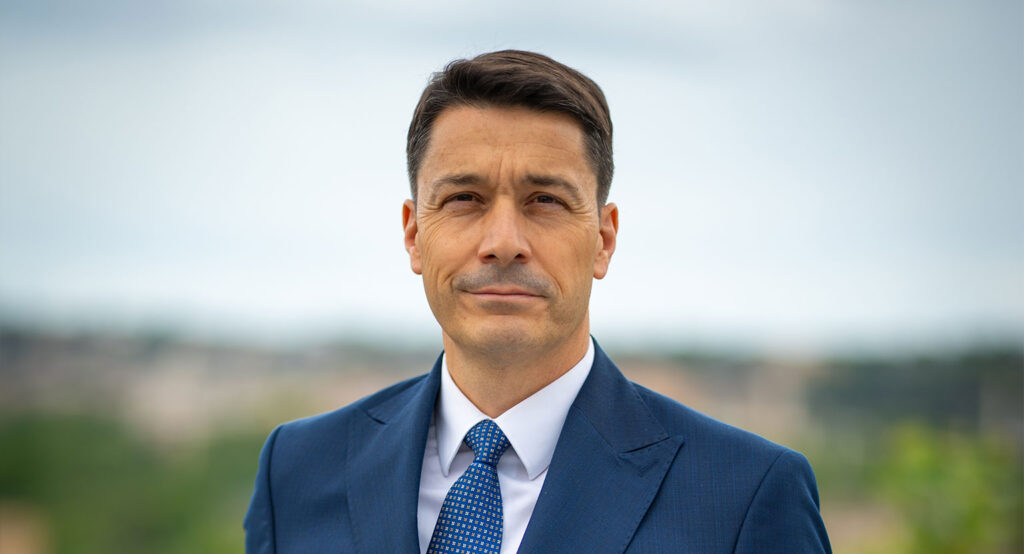
Ahead of ANDAF’s National Congress in Rome, a conversation with Paolo Fanti on the changing role of finance, the power of connection and why today’s CFO is becoming a builder of trust
Lundquist has been a long-standing partner of ANDAF, working alongside the association on the evolving role of the finance function, including on issues of communication and sustainability.
ANDAF, the Italian National Association of Chief Financial Officers and Finance Directors, brings together more than 2,600 finance professionals across Italy. Founded in 1968, the association provides a platform for professional development, peer exchange and discussion on the evolution of the finance function, connecting CFOs and finance leaders across sectors and generations.
Paolo Fanti, Director General of ANDAF and President of its Scientific Committee, brings more than 25 years of experience as a CFO to his current role. He leads the association alongside President Agostino Scornajenchi, CEO of Snam, and a board representing finance leaders from some of Italy’s leading companies.
We recently sat down with Fanti to discuss how the role of the CFO is changing and why finance leaders are increasingly becoming part of the corporate narrative.
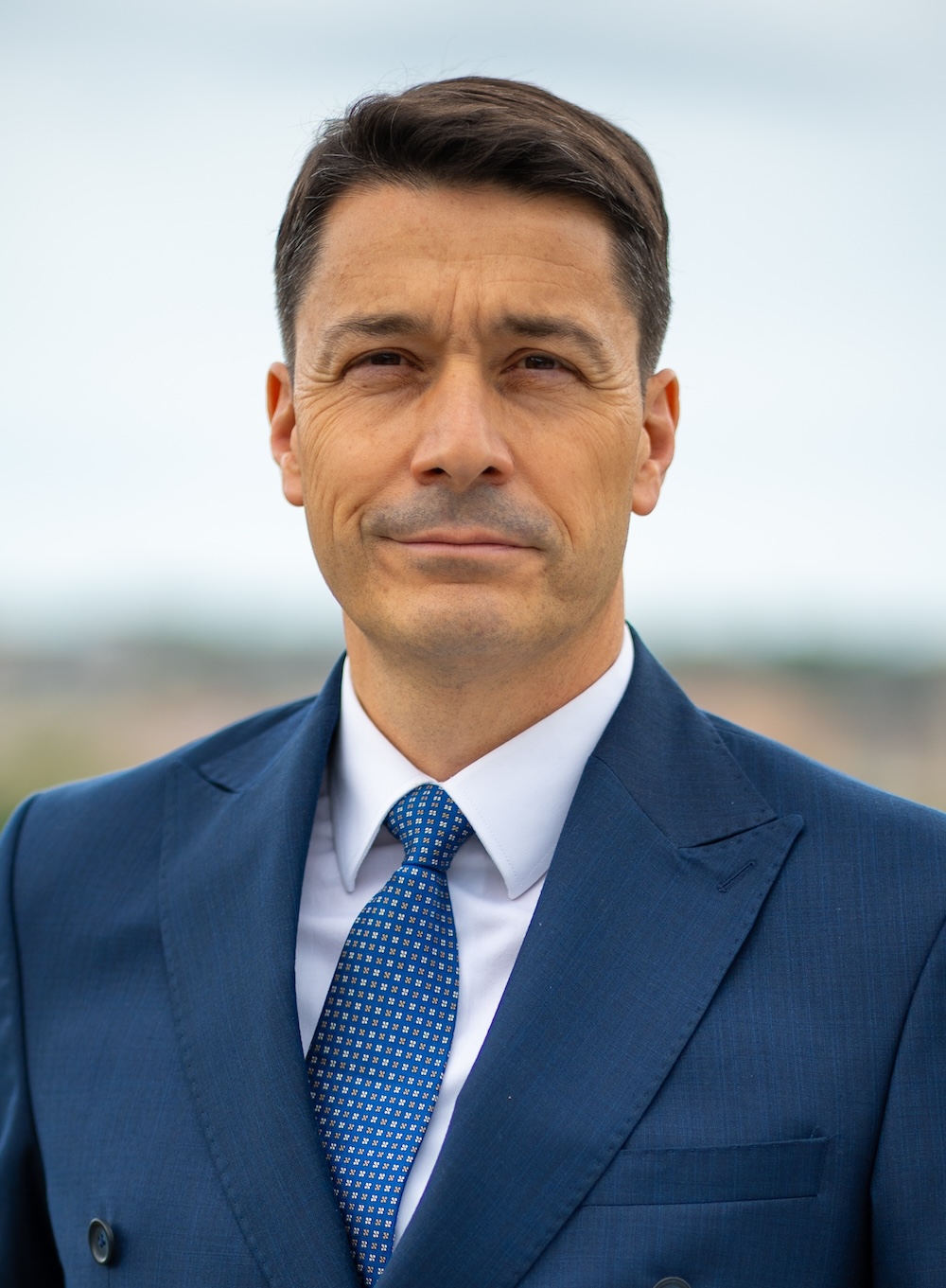
Director General of ANDAF and President of ANDAF Scientific Committee
A role in transition
The CFO is no longer simply the guardian of the numbers. As financial decisions become increasingly connected to strategy, sustainability, reputation and stakeholder trust, the finance function is becoming part of how a company explains itself to the world.
For Fanti, this evolution is not only about acquiring new technical skills. It is also about learning differently: through connection, peer-to-peer exchange and collective intelligence. In this view, the CFO’s role is expanding from financial control towards something broader: translating numbers into value, making complexity understandable and building trust through transparency.
An opportunity to connect the dots
The XLVIII ANDAF National Congress, Powering Intelligence: Energia e Talento, motori del futuro, takes place in Rome from 8 to 10 October 2026. Bringing together finance leaders, academics, institutions and business representatives, the Congress offers an opportunity to explore many of the same dimensions shaping the evolution of the CFO role: the impact of energy and technology, the importance of talent and leadership, and the ability to navigate complexity through connection and collective intelligence.
These are not separate challenges, but increasingly interconnected ones. They point to a profession positioned at the intersection of numbers, strategy, people and trust.
Finance and communication are already connected
L: At Lundquist, we primarily work with communicators. You work with finance leaders. Why should our worlds talk to each other?
PF: Because they already do, whether we acknowledge it or not. The most profound change in my profession over the last decade is that the financial statement has stopped being a technical document for auditors, banks and tax authorities. It has become one of the main instruments through which a company tells its story to the market, investors, partners and its own people.
Transforming a balance sheet into a narrative of growth means answering questions that go far beyond accounting correctness: where are we going? Why do today’s choices create tomorrow’s value? These are strategic questions, not technical ones, and they require a CFO who is also a communicator.
Every time a CFO chooses transparency when ambiguity was available, every time a risk is communicated before it becomes a problem, trust is strengthened. And trust, as anyone who has lived through a corporate crisis knows, is an asset built over years of coherent behaviour and lost in one night.
“Every time a CFO chooses transparency over ambiguity, trust is strengthened.”
The professional transition behind the energy transition
L: You often say that the real transition underway is not only the energy transition of companies, but of professionals. What do you mean?
PF: The first transition is visible to everyone. The energy shock does not stay confined to utility bills: it enters price lists, margins, investment planning and supply-chain risk assessment. Energy sourcing is no longer delegated simply to procurement. These are strategic choices requiring financial competence, scenario vision and the ability to read a fast-moving geopolitical context.
The CFO is on the front line. But there is a second transition, less visible and just as decisive: the transition of professional energies. Every high-intensity role needs refuelling, not only with technical skills, but with relational energy and a sense of belonging. The real question every finance leader should ask today is not just “where do I find energy for my company?” but “where do I find energy for myself and my growth?”
The power of connection
L: And your answer is what you call the networking mindset.
PF: Exactly. We learn by connection, and we learn much faster and more effectively that way, because we apply collective intelligence. The traditional learning model, the classroom, the course, the manual, can no longer keep pace with a context that changes every quarter. What works is real peer-to-peer exchange: the CFO of a utility comparing notes with one from manufacturing, the finance director of a multinational in dialogue with the CFO of a scale-up. Everyone reads the same context with different eyes, and the solution emerges from that diversity.
This is why ANDAF is not simply a professional network. It is a learning community, a place where those who live the complexity of the Italian finance function can exchange experience and learn from one another. The value of connection, in this sense, goes beyond networking. It becomes a way of learning, adapting and making better decisions in an increasingly complex environment.
Beyond technical excellence
L: The CFO Award gives you a privileged observatory on the profession. What distinguishes the winners?
PF: Precisely the capacity to connect. Across a hundred candidacies per edition, in five categories plus special prizes, the distinctive trait we find in winners is never technical excellence alone. We take that for granted. It is the ability to govern the numbers with deep knowledge of processes and of the dynamics that drive people.
We don’t reward CVs: we reward projects that have transformed companies. And it is no coincidence that many CFOs who have passed through our journey have gone on to become CEOs. Whoever can translate numbers into narrative, balance prudence and courage, and build stakeholder trust through transparency and governance already holds many of the tools of business leadership. The greatest risk for a CFO is not taking risks. Those who limit themselves to formal correctness are not necessarily protecting the company. They can contribute to its silent decline.
“Whoever can translate numbers into narrative, balance prudence and courage, and build stakeholder trust already holds many of the tools of business leadership.”
Credibility needs standards
L: Certification is a theme close to our research on credibility. Why does a national standard for CFOs matter?
PF: Because in a market where everyone can call themselves a CFO, the profession needs third-party, measurable validation. Through the UNI/PdR 104:2021 reference practice, ANDAF acts as the examination centre for the professional certification of CFOs, financial reporting officers and controllers, verifying competences, experience and continuous learning.
The principle is the same one that guides serious communication: credibility cannot be self-referential. Through ICFOA, the International CFO Alliance which ANDAF co-founded, this is now evolving towards a European standard with shared criteria. It is an ambitious project because it aims to create a common framework for a profession whose responsibilities are increasingly international.
Why the Congress matters beyond finance
L: With the National Congress coming up in Rome, why should our readers, many of whom are not CFOs, be interested?
PF: Because the Congress addresses two assets that will increasingly determine the competitiveness of companies and of the country: energy and talent. The title, Powering Intelligence: Energia e Talento, motori del futuro, reflects this idea. From 8 to 10 October in Rome, we will bring together finance leaders, academics, institutions and business representatives to discuss the forces shaping the future of organisations.
But the Congress is not only for CFOs. The challenges we are discussing, technology, energy, talent, leadership and the ability to navigate complexity, affect every business function. For professionals, the value of an event like this is ultimately the opportunity to learn from others, exchange experiences and return to work with new perspectives and new energy.
The Lundquist perspective
Our conversation with Paolo Fanti connects with several themes at the heart of Lundquist’s work, from .trust and .transparency to our more recent focus on strategic narration to support and complement CSRD and the growing need for companies to explain their impact, choices and performance clearly and credibly.
In an age of AI, context matters
In a world increasingly shaped by AI, the ability to produce and distribute information is becoming easier and faster. What becomes more valuable is the ability to provide context: to explain what the numbers mean, why a decision matters, how different pieces of information connect and what they mean for different stakeholders.
This is where finance and communication increasingly meet. Finance provides the evidence; communication helps give it context, meaning and relevance. The CFO is therefore becoming more than the guardian of financial accuracy. The role increasingly involves translating numbers into a narrative, making complexity understandable and contributing to the trust a company builds with its stakeholders.
For us, this is also where the idea of connection becomes particularly relevant. Credible corporate narratives increasingly depend on connecting financial information, strategy, sustainability and business performance, and doing so in a way that is coherent, transparent and meaningful. The CFO does not need to become a communicator in the traditional sense. But in an age of AI and abundant information, the ability to provide context, explain complexity and connect the dots is becoming an increasingly important part of credible financial leadership.
